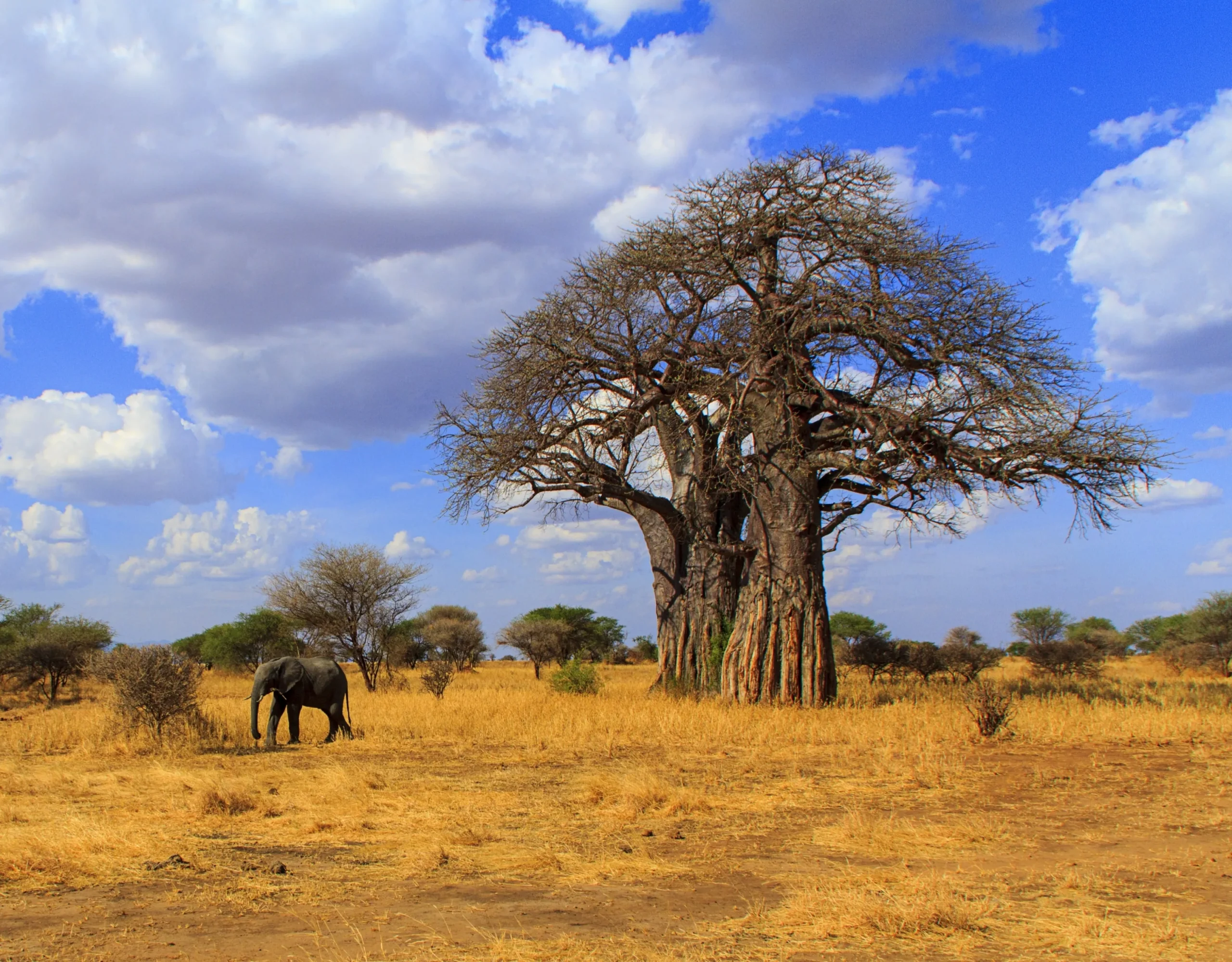
Tarangire is the park most visitors drive through on their way somewhere else. It is the first stop of many northern safaris, two to three hours from Arusha, and it is often given a single afternoon before the long drive to Ngorongoro and the Serengeti. That is a shame, because in the right season it is one of the finest parks in Tanzania.
Elephants and baobabs
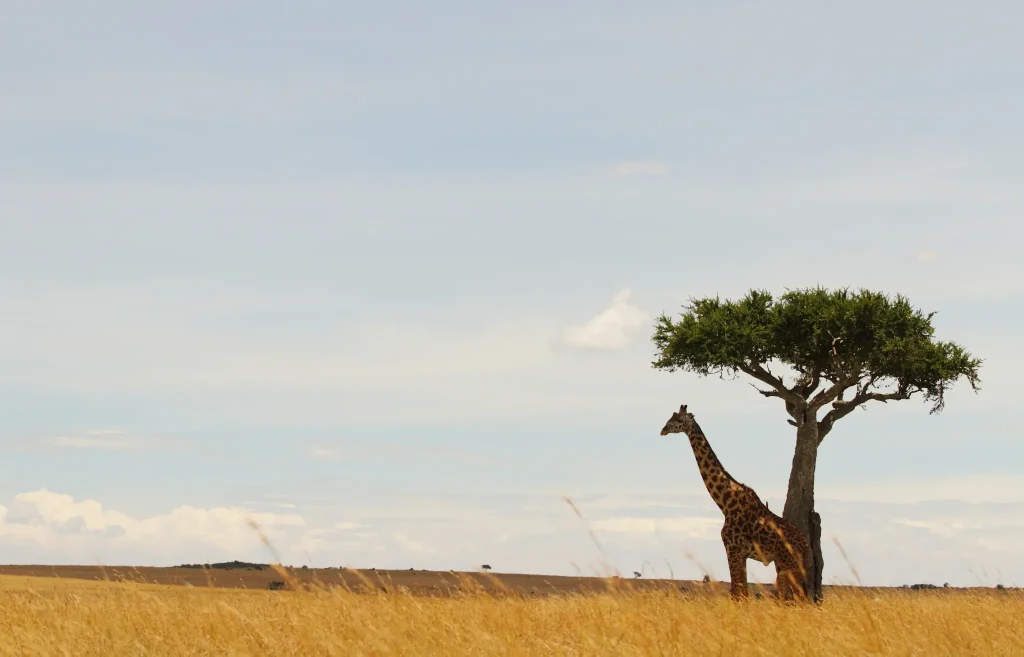
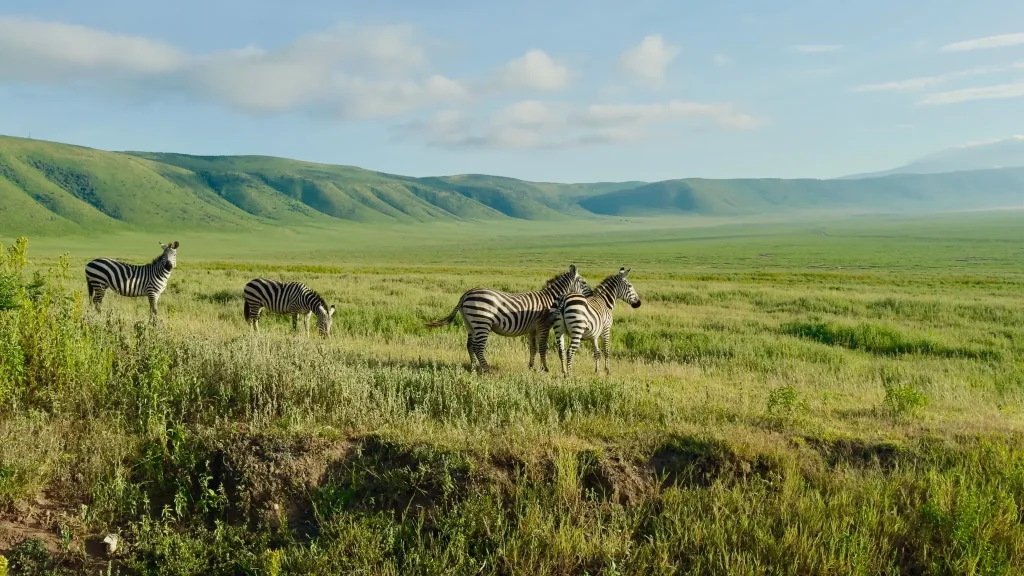
Tarangire is the park of elephants. In the dry season, from about June to October, the Tarangire River is the main source of water for miles around, and thousands of elephants gather along it, with zebra, wildebeest, buffalo and giraffe. The landscape is unlike anywhere else on the northern circuit: huge, ancient baobab trees scattered across the grassland and the river valley.
More than elephants
Lion and leopard live here, and the park is known for its birdlife, with hundreds of species recorded, from ostrich on the plains to colourful rollers and hornbills in the trees. In the rains it turns green and quiet, the animals spread out and the birdwatching is at its best.
Why spend a night
An afternoon in Tarangire shows you the elephants. A night inside or near the park shows you the rest: the early morning, when the predators are active and the light is soft, and the late afternoon, when the herds walk down to the river to drink. Some camps in the areas just outside the park also offer night drives, which are not allowed inside the national park.
When to go
June to October for the big herds by the river. November to May for green landscapes, birds and fewer vehicles, with lower park fees from mid-March to mid-May.
Fitting it in
Tarangire is the natural first stop on the way from Arusha to Ngorongoro Crater and the Serengeti, so adding a night here rarely means extra driving. On a 6-day safari or longer, it is the easiest place to slow down.
Read our Tarangire guide or see safaris that include Tarangire.