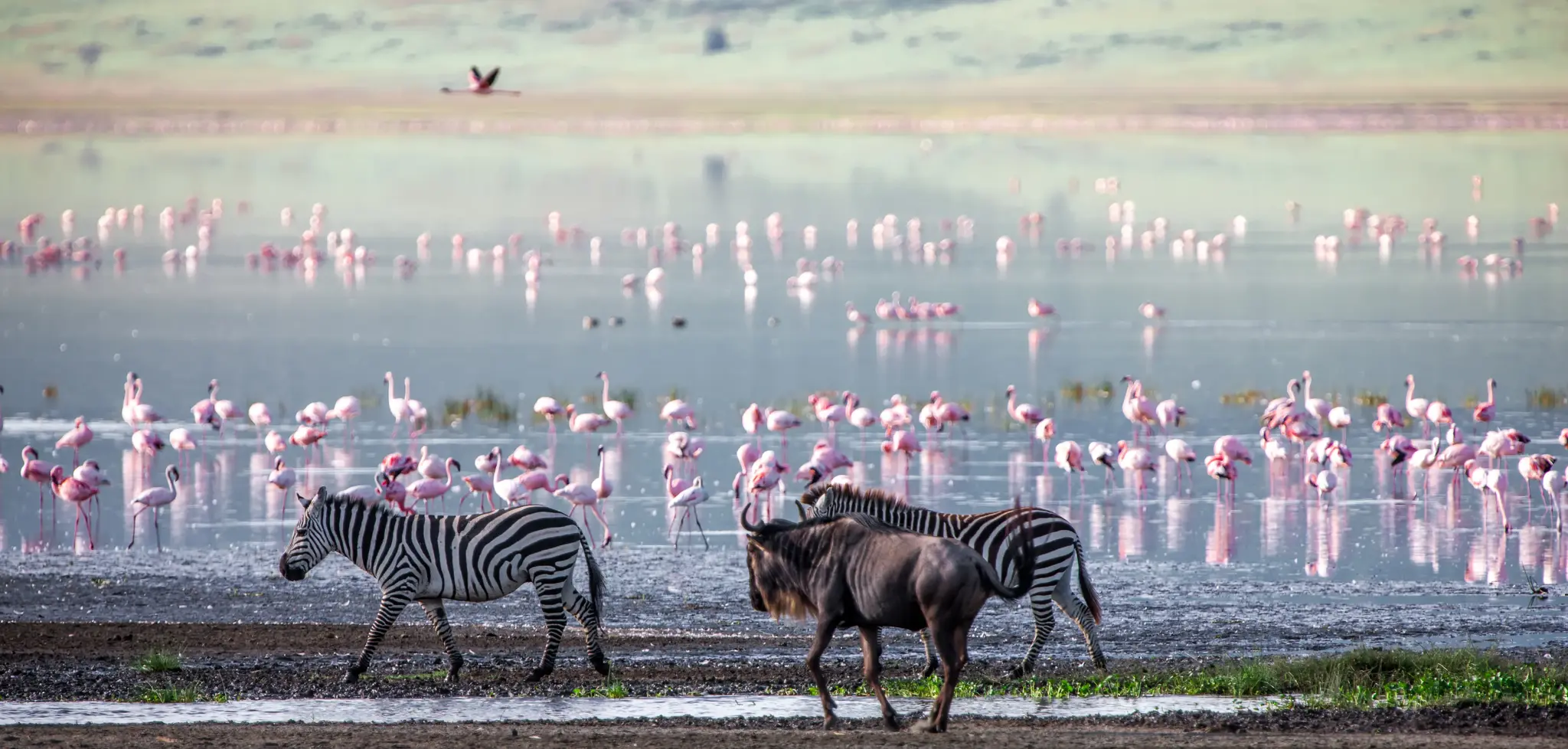
Ngorongoro Crater is the day many travellers remember most. A collapsed volcano, its floor holds lion, buffalo, elephant, zebra, hippo, flamingo and one of the best chances of seeing black rhino anywhere in Tanzania, all inside walls about 600 metres high. Here is how a crater day actually works, so you can make the most of it.
The night before
Most crater days begin the evening before, on the crater rim or in the farmland around Karatu, 30 to 45 minutes away. The rim is higher and closer to the descent road, so you are first down in the morning; it is also cold at night, often surprisingly so. Karatu lodges are warmer, with gardens and pools, and usually cost less. Either works well; the rim simply saves time.
Down at first light
Vehicles descend on a steep road into the crater, and time on the crater floor is limited by the conservation authority’s rules, so the day starts early. The first hours are the best: the light is soft, the predators are active and there are fewer vehicles. Bring a warm layer; the mist often sits on the rim until mid-morning.
What you see
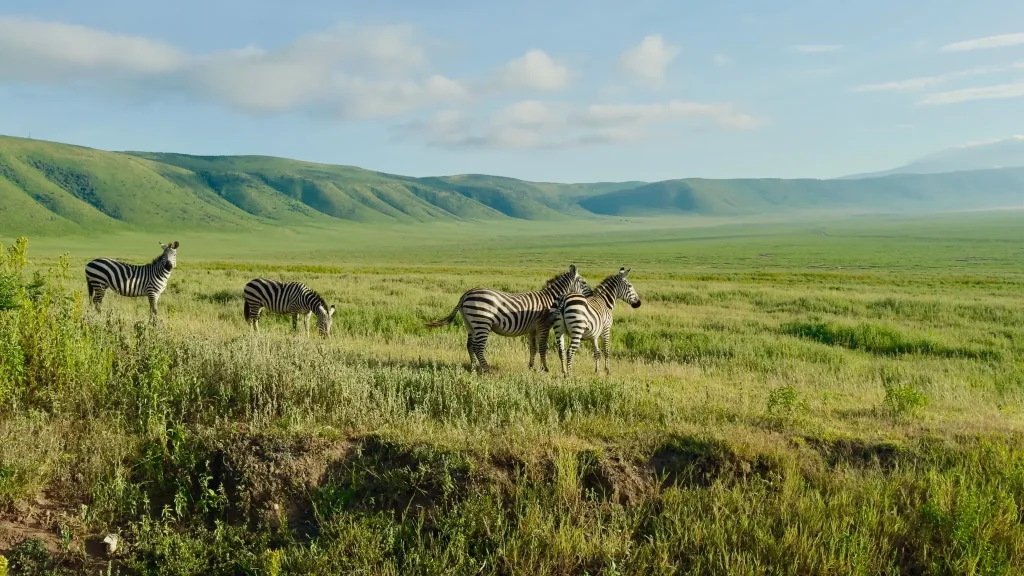
The crater floor is open grassland with a soda lake, swamps and a patch of forest, so animals are easy to see. Lion and spotted hyena are regular; buffalo, zebra and wildebeest graze in large numbers; elephants, usually old bulls, wander near the forest and the swamps. Black rhino are the prize: a small population lives on the crater floor, usually seen at a distance in the open. Bring binoculars if you can: one pair each is ideal.
Lunch by the water
Picnic lunch is taken at a designated site on the crater floor, often near a pool where hippos wallow. Keep an eye on the sky: black kites are bold enough to snatch a sandwich from your hand, and it is best to eat inside the vehicle.
What it costs
Ngorongoro is a conservation area with its own fees: an entry fee per person for every 24 hours, and a crater service fee of $295 per vehicle to drive down to the floor (Ngorongoro Conservation Area Authority, checked October 2026). On a private safari the vehicle fee is shared by your group. Our safari cost guide shows all the park fees.
Making the most of it
- Go early. Ask your guide to be at the descent road when it opens.
- Stay for the day. Half a day is possible, but a full day lets you wait at sightings rather than move on.
- Combine it well. The crater sits between Tarangire and the Serengeti, so most northern safaris pass it naturally, and Lake Eyasi or Olduvai Gorge are close by.
Read our Ngorongoro Crater guide, see where to see the Big Five, or browse safaris that visit the crater.